


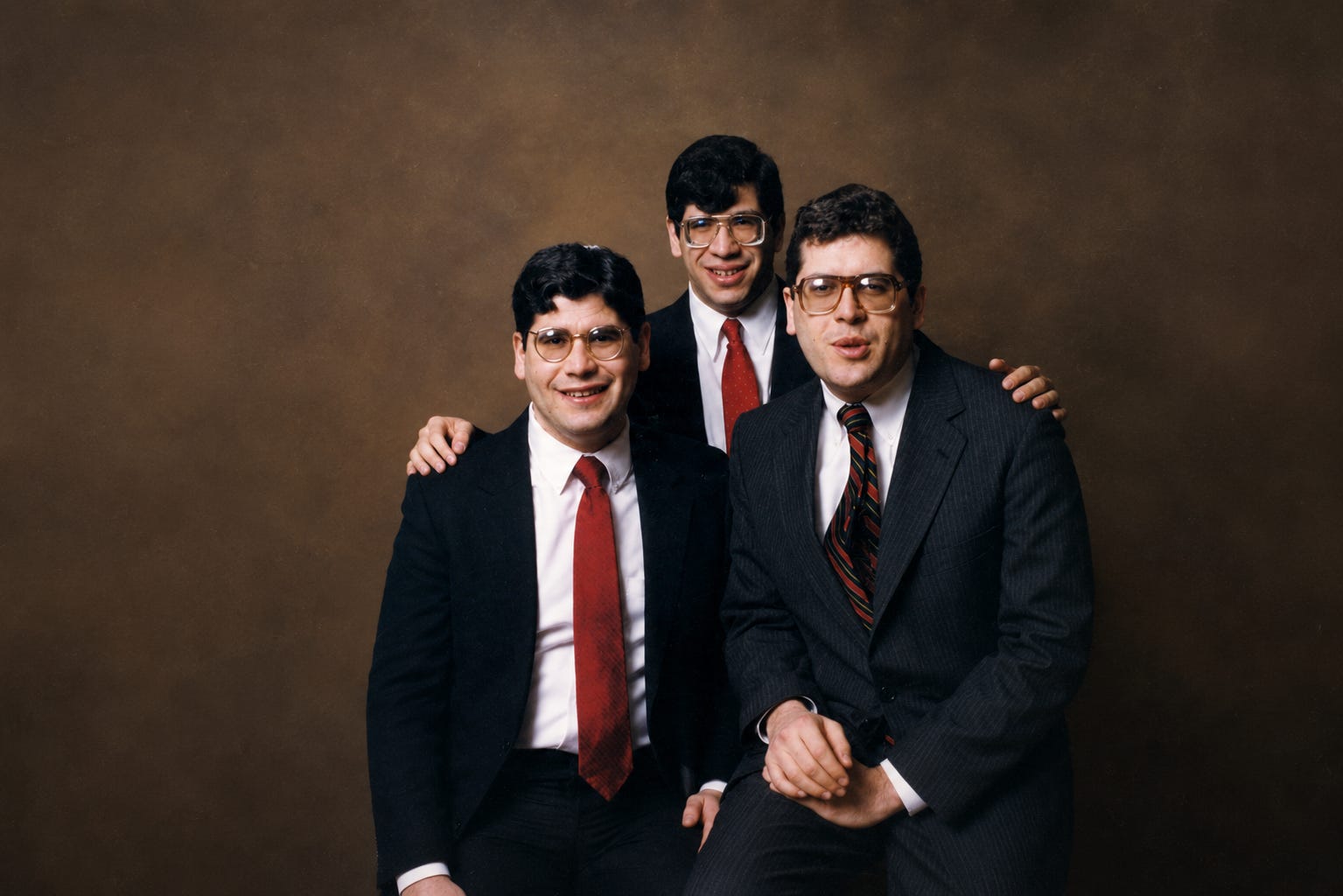
The last picture of the three of us was at my wedding. Moshe was thirty-three and Danny thirty-one. And I, the successful one, the groom, the first boy in our family to marry, was twenty-three.
Even though we looked like we came from the same place, the same family, even though we looked like brothers, we were vastly different. Or so I thought.
Two years later, Moshe would be dead and we’d be down to two. Six years after that, Danny would be dead and it would be just me. In the first years, I would still feel I was nothing like them, even a different species. And because of that distance, even though I felt loss, it was okay. I could contain it. Their tragic lives had nothing to do with mine.
Then something changed. The distance began to disappear. And without understanding why, I needed to connect to them. I didn’t know how that could happen or what it even meant to connect to dead brothers, but it was urgent and total.
On my wedding day in March 1986, and in the years that followed, I was so very different from them. They had challenging, complicated relationships. Unlike them, I was married, not to a man, not to a non-Jew. A Jewish woman. And we had kids and a house, and I had a job and a master’s degree and had even moved to Israel.
Unlike them, I was still and would always be religious.
And then when I was forty, nine years after Danny died, I was divorced and dating a woman who knew almost nothing about Orthodoxy, and soon after that I too stopped being observant.
My brothers had moved away from our cozy small-town life on Staten Island to Manhattan, the big city. Without realizing the parallel, I moved out of my cozy life in an upper middle class West Bank settlement and into the big city, Jerusalem.
Until I was in my early forties, I was driven by an unspoken need to be different from my rebellious, lost brothers.
And then, without noticing, the most important thing became to be like them.